


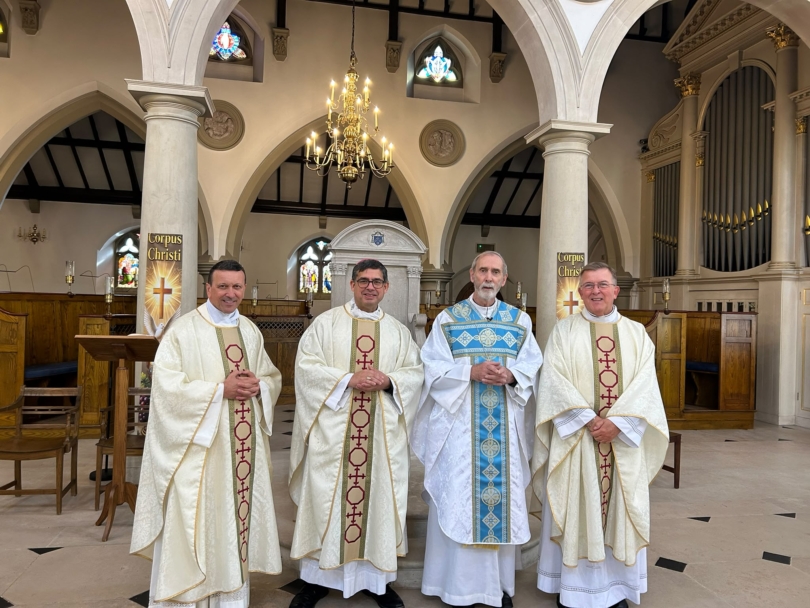
Vicar General Mgr Kevin Hale, Bishop Timothy, Bishop Alan and Canon John Harvey, Dean of the Cathedral
Safeguarding representatives from 60 parishes across the Diocese came together for a training conference on Saturday 10 October at Brentwood Cathedral – and were the first to meet Brentwood’s new Bishop-elect, Bishop Timothy Menezes. Bishop Alan Williams sm, who always attends the annual safeguarding training meetings, made the surprise introduction at 11am, as the appointment was published in Rome, and the surprise swiftly gave way to applause.
 It was an appropriate occasion to make that introduction. Both Bishop Alan and Bishop Timothy were present at the conference to show their commitment to safeguarding and the need to listen to those who have survived abuse. In fact, earlier this year Bishop Timothy, who is an Auxiliary Bishop in Birmingham, led a service of reflection and commitment at a three-day LOUDfence initiative hosted by St John Henry Newman Parish in Wolverhampton. Over the three days people of all generations have taken part, tying brightly-coloured ribbons, tokens and messages, to railings, suspended wires and on internal displays.
Antonia Sobocki, a survivor of abuse herself, founded LOUDfence with the simple but effective idea of using ribbons to symbolise lives hurt or lost through abuse, true remembrance so as not to forget, and a wish for all members of the Church to work for a safer Church.
In his Wolverhampton reflection, Bishop Timothy said: “LOUDfence is an expression of the Church’s need and responsibility to stand in solidarity with victims and survivors of abuse, whether this abuse has taken place in the setting of church life or in any other situation.” He went on to encourage those who live with the burden of abuse to speak about it when they feel able.
Brentwood Safeguarding Director Simon Moules said: “We were delighted that both Bishops came to the conference to demonstrate their commitment to safeguarding and their support for the representatives who are working, with our help, to ensure an ongoing culture of safeguarding in all parish activities and a listening ear to anyone who needs it.”
Bishop Alan reminded everyone that safeguarding is spoken about in the gospel as it is about loving our neighbour. “It is a ministry,” he added. Bishop Timothy said that he really valued being in the room and relished the welcome he had received from everyone. “The subject matter of the day is central to the life of the Church. And it was a good way to meet parishioners from so many parishes in the diocese on my first day as Bishop-elect. I made an attempt to shake everyone by the hand but people were too welcoming and I didn’t manage it,” he said.
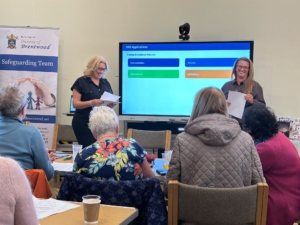 Conference attendees heard about changes in the DBS process from the Safeguarding Team (left), after a presentation from Marie Grant and Fr Andrew Browne from ‘Beyond Just Words’ about listening to victims and survivors. ‘Beyond Just Words’ is a faith-based organisation (Beyond Just Words) which provides safeguarding training from the lived experience perspective, aiming to improve the approach and response to those affected by abuse; allowing opportunities to give value to the survivor voice, and preventing further harm. Both Marie and Fr Andrew are survivors of abuse and spoke about their experiences – and gave advice on how parish safeguarding reps can listen to people in a helpful and constructive way. “We should provide safe spaces in church where victims/survivors feel they are being listened to with love. Safe spaces are created by having people in them that are prepared to listen.”
After Mass in the Cathedral, Marie and Fr Andrew went on to facilitate an interactive session discussing ‘low-level’ concerns and the importance of recording and dealing with them before they escalate. Said Marie: “Our safeguarding role is not just about doing DBS checks. We have to create an environment where people feel able to raise concerns without being told that they are making a fuss – or are seen as gossiping.”
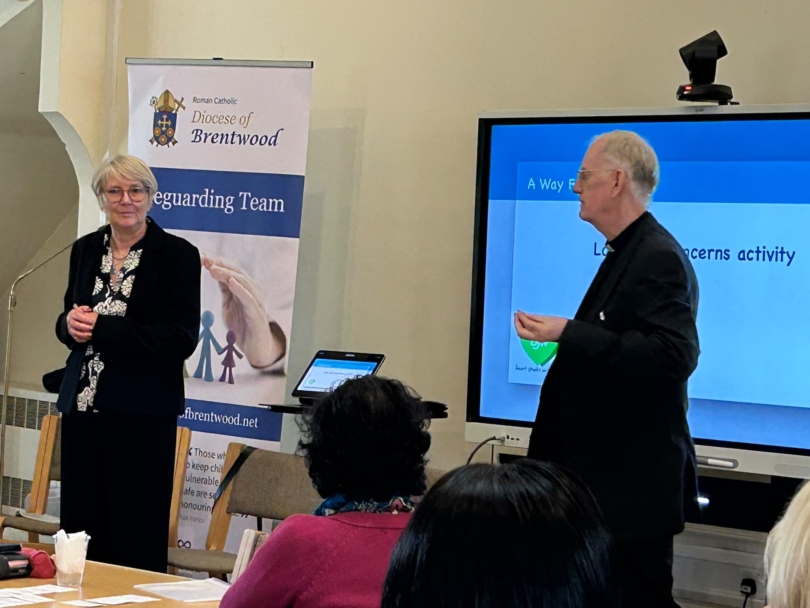
Other real-life scenarios were discussed involving a sick woman who was not caring for herself properly and driving erratically, and threats and altercations between choir and congregation members. The need to change attitudes and culture was discussed while handouts explained neglect, domestic and discriminatory abuse and what to do about them. Attendees heard that bereavement now comes under safeguarding since individuals and families can be vulnerable during this time.
Fr Andrew advised that having more than one safeguarding person available to speak to is a good idea. “Sometimes people are not comfortable in speaking to the priest, for example. And individuals may feel more comfortable speaking to a man rather than a woman or vice versa.”
Marie raised some practical considerations: “How do parishioners know who you are? And how do you show that your parish is a safe place for anyone who needs to talk?”
Discussion revolved around ensuring that safeguarding is given a high profile in the parish, with safeguarding posters and photographs of the representatives displayed prominently on noticeboards. Marie showed pictures of many parish noticeboards where this is not the case. “Safeguarding needs to be talked about from the pulpit to show that we take this seriously. We need information displayed prominently on noticeboards, on the back of toilet doors and elsewhere.”
Fr Andrew said the role of parish safeguarding representatives is one to be proud of and asked attendees to try to encourage others to sign up. “It’s about trust. There is much talk about ‘safe spaces’ but it’s the people who make a safe space. Survivors of abuse or those being abused need to feel that they can trust you – that they can talk and you will listen. If they feel safe to do so, you can change their lives.”
Building skills and confidence
Mary Johnson, a safeguarding rep from Lexden, says the annual training sessions are wonderful. “It is so good to get together with others and share experience and best practice. I have links now with other safeguarding reps from other parishes, who are there if you need help. And you always go away with lots of ideas to share with your parish priest on how to do better in providing a safer space and giving people the support they need. Having days like these builds our skills and our confidence in the role.”
Bishop Alan always introduces the sessions and celebrates Mass for the delegates, she says. “He could have gone to Adoremus today instead but he didn’t. That conveys a strong message that he really values safeguarding. And Bishop Timothy obviously shares that conviction.”
She said key questions to take away for her were:
- How do we support victims/ survivors in our parish?
- How do we ensure our church is a safe place to be?
- Do we notice low level concerns? What do we do with these? Do the safeguarding rep and parish priest discuss these regularly and act on them if necessary?
- What message does our church give out about safeguarding and its importance?